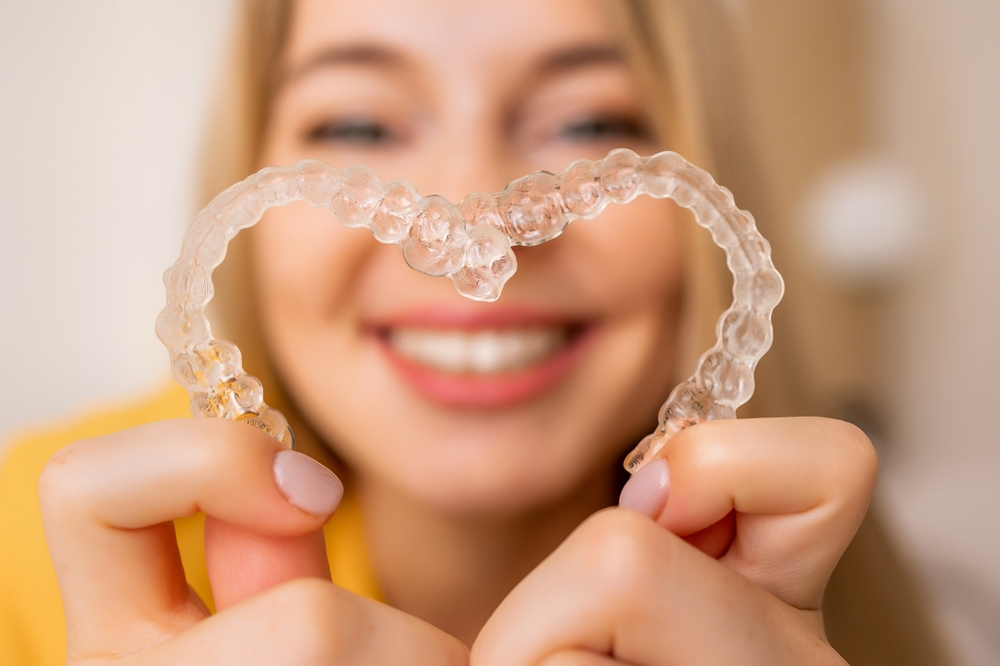
Clear aligners have become an increasingly popular option for people looking to straighten their teeth without traditional braces. With so many options available, including at-home aligner kits that can be ordered online, it can be difficult to know which treatment is the right choice.
Although at-home aligners and Invisalign may look similar, there are important differences in how these treatments are planned, monitored, and adjusted. Before making a decision, it's important to understand what you're actually getting.
What Are At-Home Clear Aligners?
At-home clear aligners, sometimes called mail-order or direct-to-consumer aligners, are marketed as a convenient and often less expensive way to straighten teeth. Depending on the company, patients may take their own dental impressions or visit a scanning location before receiving a series of custom aligners in the mail.
These services typically involve fewer in-person dental appointments, with some relying primarily on remote communication to monitor treatment.
While the convenience and lower advertised prices can be appealing, moving teeth involves more than simply making them look straighter. Without a thorough dental examination and appropriate monitoring, important oral health concerns may go undetected.
How Is Invisalign Different?
Invisalign uses a series of custom-made, removable clear aligners to gradually move teeth into their planned positions. However, one of the biggest differences between Invisalign and many at-home aligner programs is the level of professional involvement throughout treatment.
Invisalign treatment begins with an evaluation by a trained dental provider. During this appointment, your dentist examines your teeth, gums, and bite to determine whether clear aligners are appropriate for you.
Digital scans and specialized treatment-planning software help your dentist develop a personalized plan based on your individual needs.
Throughout treatment, your dentist monitors your progress, checks that your teeth are moving as expected, and makes adjustments when necessary.
Why Does Professional Supervision Matter?
Straightening teeth is not purely cosmetic. Every time a tooth moves, changes occur in the surrounding bone and supporting tissues.
Before beginning orthodontic treatment, it's important to evaluate the health of your teeth and gums, identify any existing dental problems, and understand how your upper and lower teeth fit together.
Without proper evaluation and monitoring, orthodontic treatment can potentially lead to complications such as:
Gum recession or damage to supporting tissues
Unwanted changes in your bite
Tooth movement that does not follow the intended treatment plan
Increased tooth sensitivity or discomfort
Additional treatment needed to correct unexpected results
These complications are not inevitable with at-home aligners, but they highlight why appropriate dental supervision is important with any orthodontic treatment.
Not All Tooth Movement Is the Same
Another important difference is the complexity of the cases that may be treated.
Some at-home aligner programs focus primarily on minor cosmetic adjustments, particularly involving the front teeth. However, even small changes to the position of your front teeth can affect how your entire bite comes together.
Invisalign offers treatment options for a variety of alignment concerns, including crowding, spacing, and certain bite problems. Depending on the case, dentists can also use small, tooth-colored attachments to help guide specific tooth movements.
Of course, Invisalign is not the right solution for every patient. Some complex orthodontic cases may require braces or another treatment approach. An in-person evaluation helps determine which option is most appropriate.
Is Invisalign More Expensive Than At-Home Aligners?
Cost is often one of the biggest factors patients consider when comparing treatments.
At-home aligner companies may advertise lower upfront prices, partly because their treatment models involve fewer in-person appointments.
Invisalign treatment generally includes professional evaluation, individualized planning, and ongoing clinical supervision. The overall cost depends on the complexity of the case and the length of treatment.
It's also worth considering that if an aligner treatment does not produce the intended results, additional corrective treatment may be necessary.
When comparing prices, patients should ask exactly what is included, whether follow-up appointments are covered, and what happens if their teeth do not move as expected.
Convenience vs. Confidence
One of the biggest selling points of at-home aligners is convenience. However, Invisalign also offers flexibility for patients with busy schedules.
Because Invisalign aligners are removable, patients can take them out to eat, brush, and floss. Regular appointments are still necessary, but they are generally less frequent than appointments for traditional braces.
The difference is that patients have a dental professional available to evaluate concerns, monitor their progress, and make necessary adjustments throughout treatment.
Which Option Is Right for You?
Choosing a teeth-straightening treatment should involve more than comparing prices or looking at before-and-after photos.
Every smile is different, and what works well for one person may not be appropriate for another. Factors such as gum health, existing dental work, tooth positioning, and bite alignment all influence the safest and most effective treatment approach.
At-home aligners may seem like a simple solution, but it is important to understand the potential limitations of treatment that does not include regular in-person dental care.
The bottom line: Clear aligners are a great advancement in orthodontic treatment, but the expertise behind the treatment is just as important as the aligners themselves.
If you're considering straightening your teeth, scheduling an Invisalign consultation is a great first step. A professional evaluation can help you understand your options and develop a treatment plan that prioritizes both the appearance and long-term health of your smile.


Hours of Operation
Daily by appointment 9:00 AM - 6:00 PM
Thursday 9:00 AM - 6:00 PM
Friday 9:30 AM - 6:30 PM
Daily by appointment 9:00 AM - 6:00 PM
Thursday 9:00 AM - 6:00 PM
Friday 9:30 AM - 6:30 PM
Powered by